
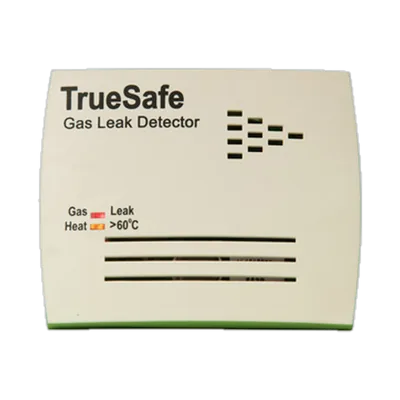
TS230HLRB
LPG & PNG detector, 230 V
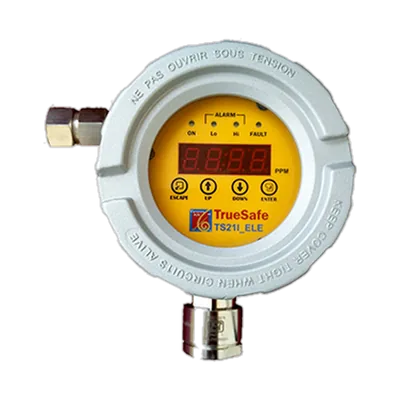
Mains-powered gas leak detector with heat sensing, latching relay and built-in buzzer. The standard unit for a domestic or society kitchen.
VighnahartaHome/Gas detection
LPG · PNG · Carbon monoxide
LPG sinks. PNG rises. Carbon monoxide does neither — it mixes. Most of the gas detectors we are called out to look at were installed at the wrong height for the gas they were meant to catch, which is an expensive way to own no protection at all.
| Gas | Behaviour in air | Where it collects | Mounting height | Typical location |
|---|---|---|---|---|
| LPG | Denser than air | Pools at floor level and creeps along the slab | Low · ~30 cm | Kitchens, cylinder banks |
| PNG natural gas |
Lighter than air | Rises and collects against the ceiling | High · at ceiling | Piped supply, societies |
| CO carbon monoxide |
Close to the density of air | Mixes through the space rather than settling | Breathing height | Car parks, DG and boiler rooms |
Where it belongs
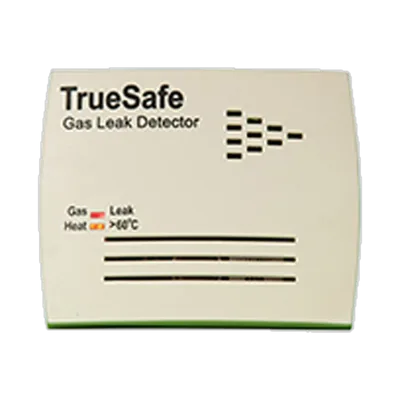
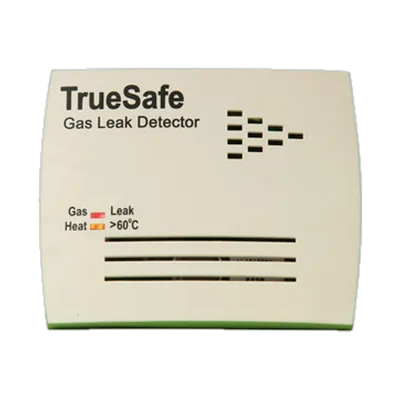
A detector per kitchen, with a buzzer and a relay that can drive a common alarm or cut a solenoid valve on the gas line.
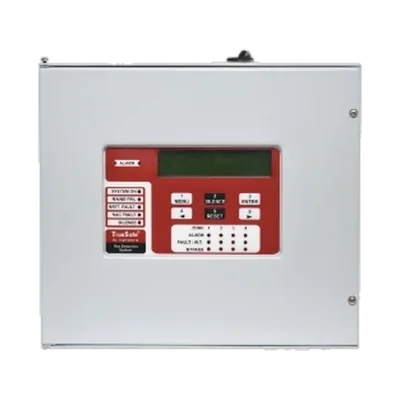
Hotels, banquet halls and canteens running multiple burners and a cylinder bank — usually a zoned system rather than standalone units.
CO detection tied to the ventilation system, so exhaust fans respond to a real reading rather than running on a timer.
Fixed multi-zone detection for methane, CO, oxygen depletion and H₂S, with portable instruments for confined-space entry.
The range
Vighnaharta gas detection, manufactured in India — which matters for lead time, calibration and the fact that a faulty unit does not have to cross a border to be looked at.
The part nobody mentions at purchase
A smoke detector that is ten years old is usually still a smoke detector. A gas sensor that is ten years old is usually an ornament.
Sensing elements drift as they age, and electrochemical cells have a genuinely finite working life. Without periodic calibration and eventual replacement, a gas detection installation degrades quietly into decoration — still powered, still showing a green lamp, no longer able to detect anything. It is the reason gas detection belongs on a maintenance contract in a way that much other equipment does not.
Largely a mounting-height question. LPG is heavier than air and pools low, so its detector sits near the floor. PNG is largely methane, lighter than air, and collects at the ceiling. Plenty of units sense both — but one fitted at the wrong height protects nothing.
Wherever combustion happens in an enclosed space: basement and stilt parking, generator rooms, boiler rooms, commercial kitchens. CO mixes through the air rather than settling, so it is mounted at breathing height.
A standalone unit with its own buzzer and relay covers one kitchen well. Once you are covering several flats, a car park or a plant area, a zoned panel earns its cost — it tells you which zone is in alarm instead of just that something somewhere is.
The relay output can drive a solenoid valve on the gas line, and that is a common arrangement in commercial kitchens. It is worth designing deliberately — including what happens on a power failure — rather than adding it as an afterthought.
Next step
Which gas, how many kitchens or zones, and whether it is a home, a society, a kitchen, a car park or a plant. That is enough for us to tell you what the installation should look like.